

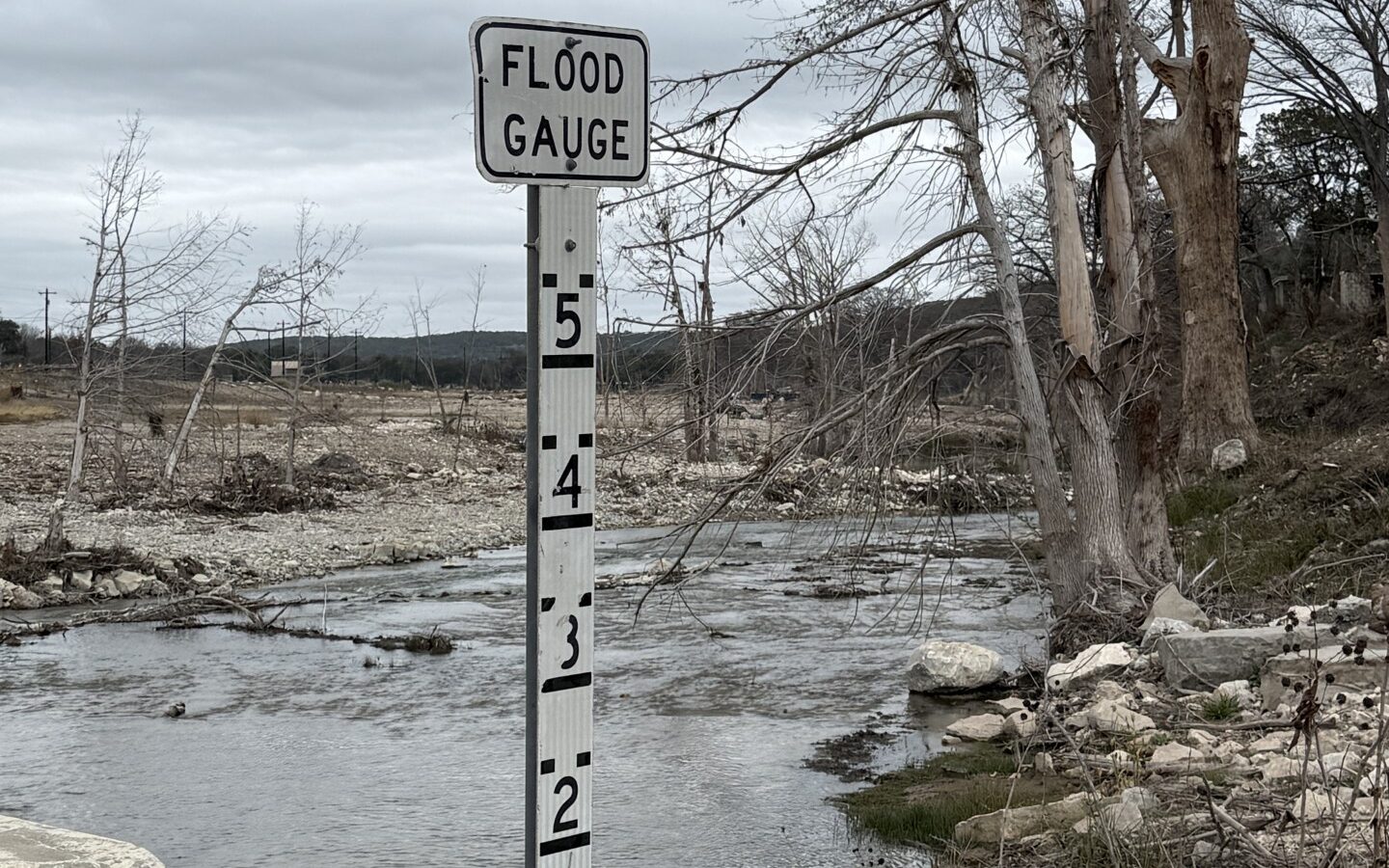
A central concern for researchers is how AI tools can be leveraged to help us better respond to disasters. But how can we use AI tools reliably in ways that also draw on human judgement? A new study from a multi-university team, including TIPI’s own Keri K. Stephens, explores that question through a system designed to help communities make faster, better evacuation decisions with AI input when flood waters rise.
The system, tested in the flood-prone Lowcountry of South Carolina, combines AI-driven flood prediction with real-time reports from people on the ground. The AI forecasts river levels up to five hours in advance and maps which roads and areas are likely to be impacted. Because conditions can change fast, the system also pulls in social media posts from residents reporting on-the-ground conditions. It filters posts for relevance, and layers that human intelligence onto the same map. The result is a tool that suggests evacuation routes and is updated in real time as both AI forecasts and human reports come in.
The system works because it’s about what the researchers refer to as Human-AI Convergence—combining human knowledge with AI insights. The AI does what it’s good at. It processes massive amounts of hydrological data and generates predictions faster than a human team could. At the same time, people contribute on-the-ground awareness, contextual judgment, and the kind of local knowledge that no dataset can actually capture. In this sense, they address each other’s blind spots.
The system the team developed represents a fundamentally different approach where AI predicts what can happen, humans report what is happening, and people in harm’s way can make informed decisions about how to stay safe.
The study was funded by NSF grant #2125283 and conducted by Rishav Karanjit, Vidya Samadi, Amanda L. Hughes, Pamela Murray-Tuite, and Keri K. Stephens. The full article is available in Environmental Modelling and Software: https://www.sciencedirect.com/science/article/pii/S1364815226001052?via%3Dihub